
How Long Does Professional Teeth Whitening Last?
After teeth whitening, it’s natural to want that brighter smile to last. Professional teeth whitening results may last around three years with good care, but there is no single timeline for everyone. The treatment you choose, the original colour of your teeth and your daily habits all play a part.Whitening does not prevent future stains. Even after a successful treatment, tea, coffee and tobacco can gradually change the colour of your teeth again. A realistic maintenance routine helps you look after your results without giving up every food you enjoy.
Understanding Your Whitening Treatment
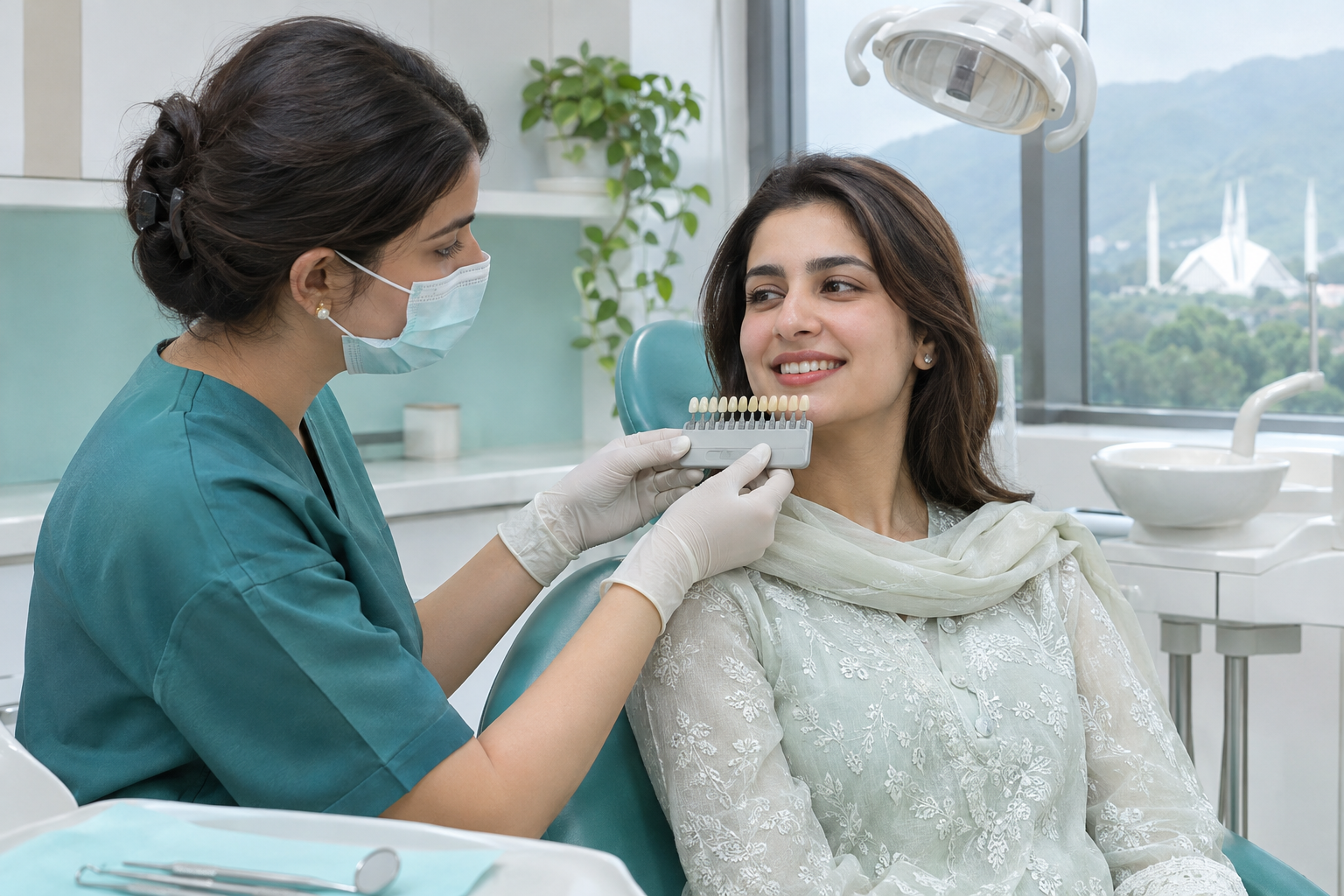
Professional whitening can take place at a dental clinic or at home using trays and gel prescribed by your dentist. Both approaches need clear instructions, including how much gel to use and how long to leave it on.The assessment before treatment matters, too.
Your dentist can check for problems that need attention, discuss any sensitivity and explain how your particular stains may respond.
This is especially useful if you have tried whitening before and were disappointed with the result.Existing dental work also needs consideration. Crowns, veneers and fillings will not change colour with whitening. If you have a visible filling or crown, ask how it might look beside your natural teeth after treatment.
Daily Habits and Returning Stains
For many of us, tea or coffee is part of the day. You may have chai with breakfast, another cup at work and one more in the evening. Over time, that regular exposure can contribute to staining.
You do not need to assume that drinking tea makes whitening pointless. Reducing frequent consumption and keeping your teeth clean can help maintain the result. Tobacco is another source of staining and should be avoided for your oral and general health.
If your smile starts to look duller, speak to your dentist before buying another whitening kit. Surface deposits may need cleaning, and further bleaching may not be the first step.
A Practical Teeth Whitening Aftercare Routine
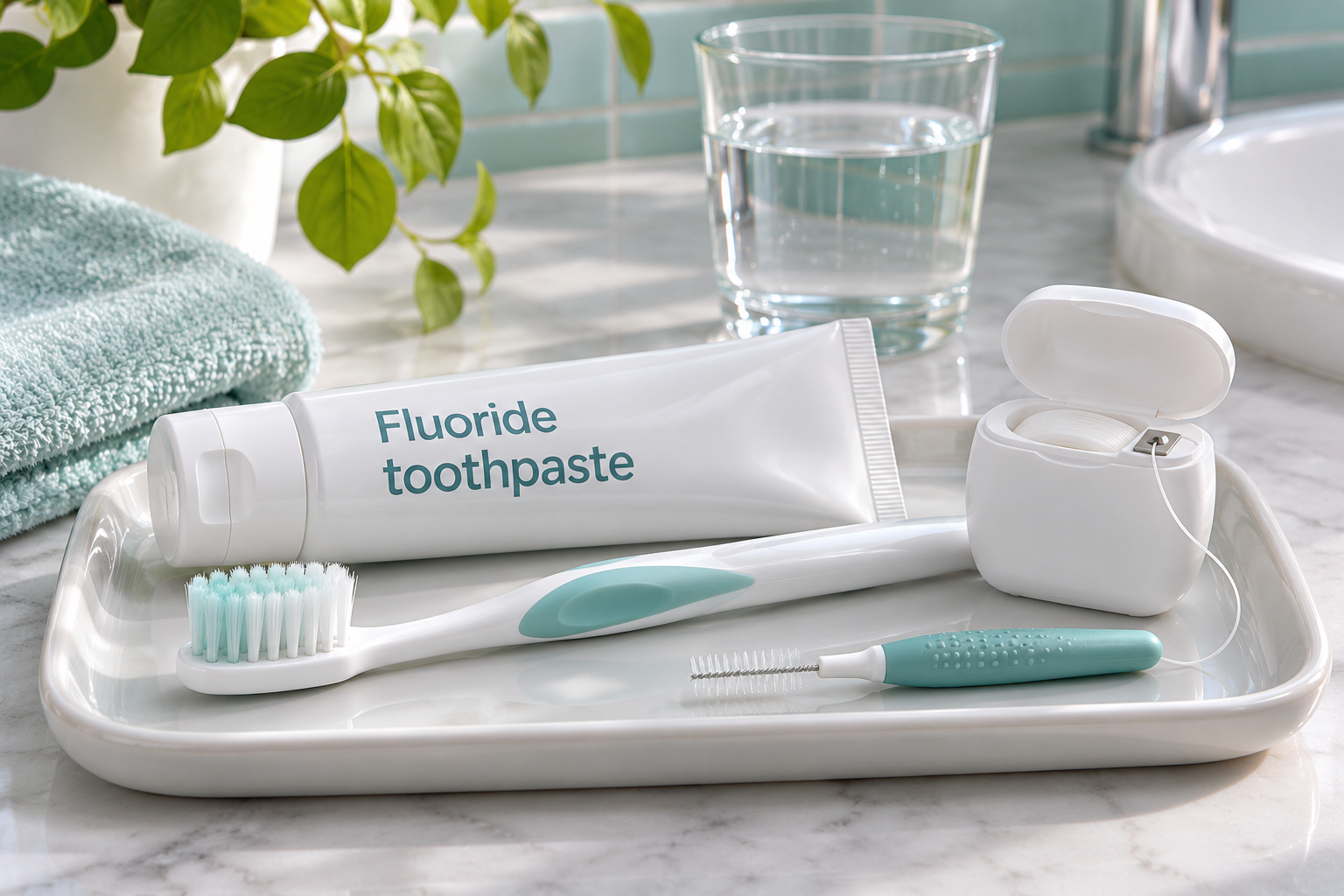
The basics of teeth whitening aftercare are familiar: brush gently twice a day for two minutes with fluoride toothpaste, use a soft-bristled toothbrush and clean between your teeth daily with floss or interdental brushes.Keep up with dental visits at the intervals your dentist recommends.
If you are using prescribed home trays, follow the instructions rather than adding more gel or wearing them for longer. Extra treatment can increase irritation.Whitening toothpaste may help remove surface stains, but it is not essential for everyone.
If your teeth feel sensitive, ask whether a sensitivity toothpaste would suit you before adding another whitening product.
Eating and Drinking After Whitening
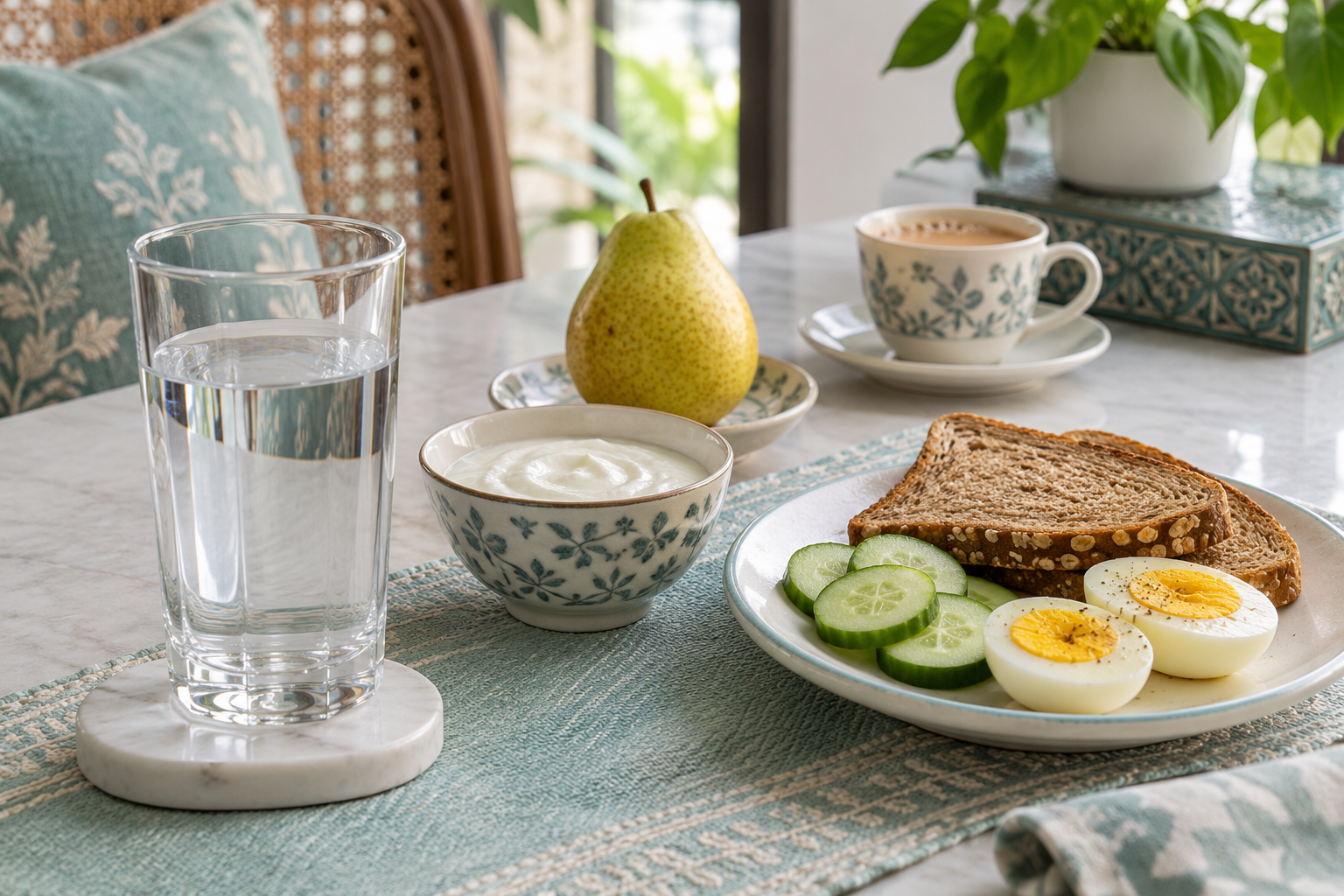
A balanced diet is still appropriate after whitening. Drink water regularly and continue eating a variety of vegetables, fruit, protein and calcium-containing foods, such as plain yoghurt or milk if they suit your diet.
These foods support nutrition; they do not act as whitening treatments.You may have seen advice to eat only white foods. Research suggests that a strict “white diet” is generally unnecessary for whitening effectiveness during treatment. That is separate from the staining that frequent tea, coffee or tobacco exposure can cause over time.
Follow the instructions supplied with your treatment. There is no reason to cut out nutritious foods simply because they are colourful.
Products and Habits Worth Avoiding
Avoid combining whitening strips, gels and homemade mixtures without checking with your dentist.
It can be tempting to add another product when you want faster results, but doing so may leave your teeth sensitive or your gums irritated.
Sugary and acidic drinks also deserve attention because of their effects on oral health. After acidic food or drink, rinse with water and wait about an hour before brushing. This gives saliva time to help neutralise acids before you brush.
Natural Remedies and Enamel Protection
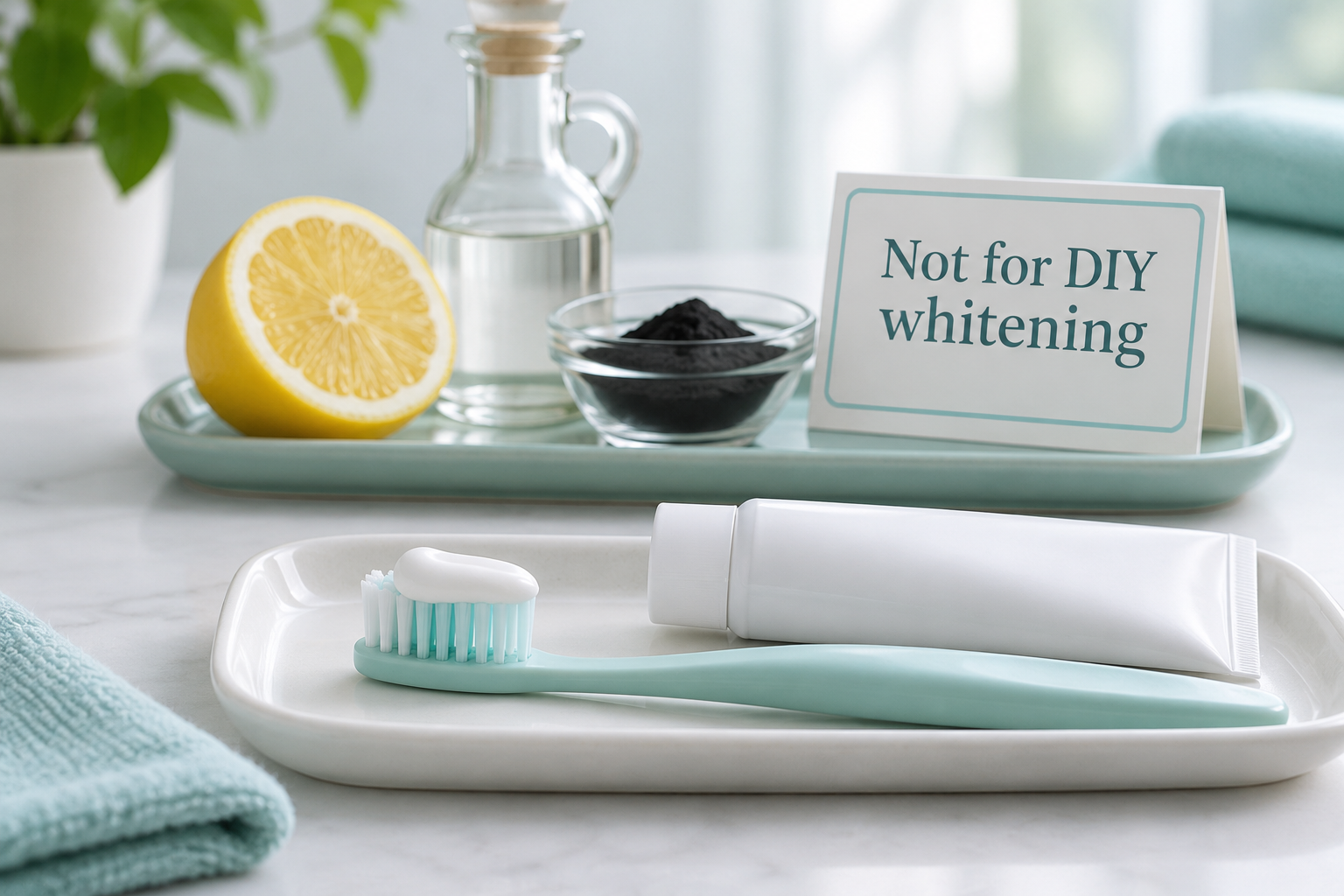
Kitchen remedies often sound appealing because the ingredients are familiar. Unfortunately, “natural” does not always mean suitable for your teeth.
Lemon juice, vinegar and acidic fruit mixtures can wear down enamel when applied directly or left against teeth. Charcoal powders and rough homemade scrubs may also cause abrasion. Whitening cannot repair enamel that has been worn away.
There is no reliable evidence that coconut oil pulling or turmeric whitens teeth. Homemade baking soda-and-peroxide mixtures are also different from professionally formulated dental products.
The most useful care you can provide at home is consistent cleaning and following your treatment instructions. If you want to try a new whitening product, ask your dentist whether it fits your existing routine.
Sensitivity and Future Touch-Ups
Some people experience temporary sensitivity or mild gum irritation during whitening. Let your dentist know if symptoms persist, become painful or worry you. They can help you decide whether the treatment or your daily routine needs adjusting.
There is no fixed teeth whitening touch-up schedule that works for everyone. Your dentist should consider your current tooth colour, previous treatment and any sensitivity before recommending more whitening.
Planning Professional Teeth Whitening in Islamabad
Before booking professional teeth whitening in Islamabad, arrange an assessment and explain what you hope to achieve. Mention previous whitening, sensitive teeth and any crowns or fillings.
Ask about the recommended method, the full cost and the support available after treatment. A useful consultation should leave you knowing what results are realistic, how to care for your teeth and whom to contact if you have a problem.
Frequently Asked Questions
How long does professional teeth whitening last with good aftercare?
Results may last around three years, although some people notice colour changes sooner. Your treatment, existing discolouration and habits such as smoking or frequent tea drinking influence how long your teeth stay brighter.
Can I still drink tea or coffee after whitening?
Follow the advice for your particular treatment. Over time, tea and coffee can contribute to staining, so reducing frequent consumption may help maintain your results.
Can natural remedies replace a whitening touch-up?
They are not a reliable substitute. Acidic mixtures and abrasive scrubs may damage teeth. If stains return, your dentist can check whether cleaning or further whitening would be appropriate.