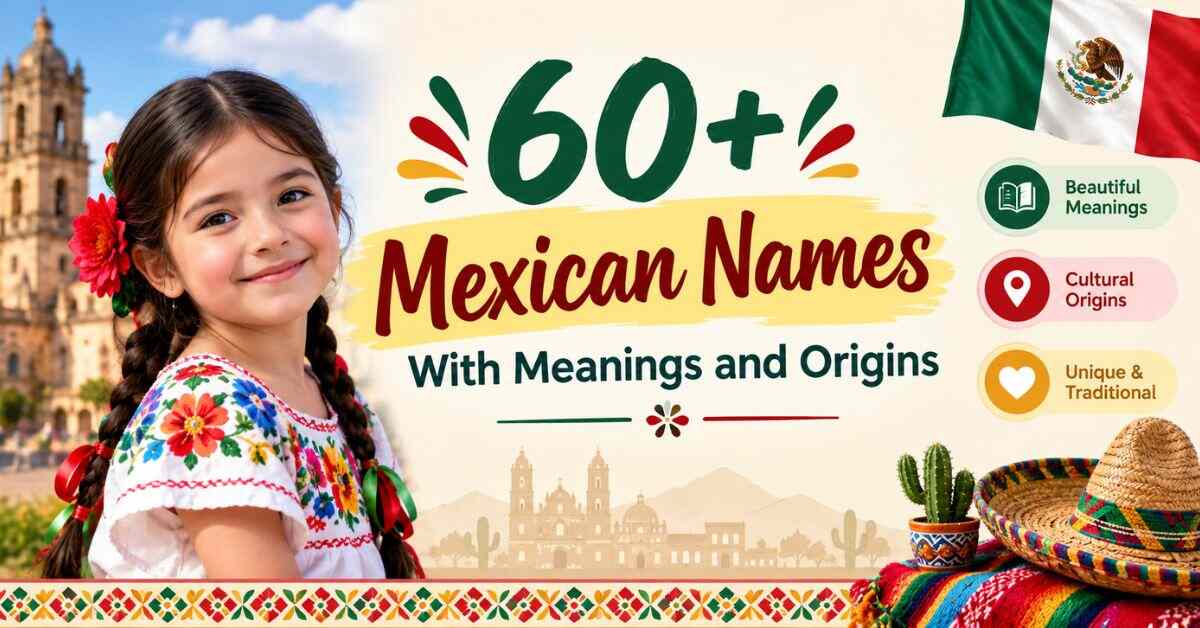
Mexico’s naming tradition blends Spanish heritage, Catholic faith and ancient Indigenous languages, which gives families a wonderfully rich pool to draw from. The sounds are warm and musical, and many choices are easy to say in any country. If you are exploring Mexican names, this list gives you 60 options, each with its origin and meaning. They are grouped into classic boy names, modern boy names, popular girl names, names from Nahuatl and Mayan roots, faith-inspired picks and playful nicknames. Read through each section, note the ones that stay with you, and use the tips at the end to choose with confidence.
Where Mexican Names Come From
Most names used in Mexico arrived with Spanish settlers, and many of those trace back to Hebrew, Latin, Greek and Germanic roots. Others come from Indigenous languages such as Nahuatl, the language of the Aztecs, and Mayan languages spoken in the south. Catholic tradition has also shaped naming for centuries, so saints, holy titles and religious festivals appear again and again. Another common custom is the double name, such as José Luis or María Fernanda, and many people also carry two surnames, one from each parent. Pronunciation is friendly once you learn the basics: the letter “j” sounds like an English “h,” and “x” in Nahuatl names often sounds like “sh” or “ch.”
Classic Boy Names
These names have been loved in Mexico for generations. They are familiar, dignified and easy to pair with almost any surname.
- José (Hebrew): Means “God will add.” One of the most beloved names in the Spanish-speaking world, with Pepe as a common nickname.
- Juan (Hebrew): Means “God is gracious.” Simple, strong and known everywhere.
- Luis (Germanic): Means “famous warrior.” Short, classic and easy to pronounce.
- Carlos (Germanic): Means “free man.” A warm favorite with Carlitos as an affectionate form.
- Miguel (Hebrew): Means “who is like God.” Named for the archangel Michael, with Miguelito as a sweet nickname.
- Alejandro (Greek): Means “defender of mankind.” Grand and confident, with Alex or Alejo as short forms.
- Diego (Spanish): Of debated origin, often linked to a form of Jacob or to a Greek word for “teaching.” Bright and friendly.
- Javier (Basque): Means “new house.” A refined name, said hah-vee-EHR.
- Ricardo (Germanic): Means “brave ruler.” Smooth and strong, with Rick or Richi as nicknames.
- Fernando (Germanic): Often explained as “adventurous” or “bold traveler.” Elegant and romantic.
- Rafael (Hebrew): Means “God has healed.” Gentle and kind, with Rafa as a casual form.
- Manuel (Hebrew): Means “God is with us.” A traditional name with Manolo as a familiar nickname.
Modern Boy Names
Many families now lean toward fresher choices. These names appear often in Mexican classrooms today, and they travel well across languages.
- Santiago (Spanish): Means “Saint James.” Currently one of the most popular choices, with Santi as a friendly short form.
- Mateo (Hebrew): Means “gift of God.” Soft, modern and easy to say worldwide.
- Sebastián (Greek): Means “venerable” or “revered.” Stylish and warm, with Sebas as a nickname.
- Emiliano (Latin): Linked to a Roman family name that may mean “rival” or “eager.” Made famous by revolutionary Emiliano Zapata.
- Leonardo (Germanic): Means “brave lion.” Bold and artistic, with Leo as a popular short form.
- Adrián (Latin): Means “from Hadria,” an ancient town. Smooth, simple and stylish.
- Ángel (Greek): Means “messenger.” A common and gentle name in Mexico, often used as a first or second name.
- Maximiliano (Latin): Means “greatest.” Long and distinctive, with Max or Maxi as short forms.
- Joaquín (Hebrew): Means “God will establish.” Rich and refined, with Kino as a lively nickname.
- Gael (Breton): Means “generous.” A short, modern name that has risen quickly in Mexico.
Popular Girl Names
These names are widely used and easy to enjoy, from timeless classics to current favorites.
- María (Hebrew): The most traditional name of all, with a meaning that is debated. Often paired with another name, as in María José.
- Guadalupe (Arabic/Latin): Often explained as “river of the wolf.” Tied to the Virgin of Guadalupe, with Lupita as a beloved nickname.
- Sofía (Greek): Means “wisdom.” Elegant, popular and easy to spell.
- Valentina (Latin): Means “strong” or “healthy.” Pretty and lively, with Vale as a nickname.
- Camila (Latin): Often linked to “young ceremonial attendant.” Smooth and popular, with Cami as a short form.
- Ximena (Basque/Spanish): Linked to a form of Simon, meaning “one who hears.” Said hee-MEH-nah.
- Regina (Latin): Means “queen.” Regal and simple, with Reg or Gina as nicknames.
- Fernanda (Germanic): The feminine form of Fernando, meaning “adventurous.” Warm and friendly, with Fer as a short form.
- Renata (Latin): Means “reborn.” Graceful and modern, with Rena as a nickname.
- Mariana (Latin): A blend of María and Ana. Soft, classic and widely loved.
- Daniela (Hebrew): Means “God is my judge.” Cheerful and common, with Dani as a nickname.
- Paulina (Latin): Means “small.” Sweet and vintage, with Pau or Paulita as short forms.
Names From Nahuatl and Mayan Roots
A growing number of families honor Indigenous heritage with names from these languages. They are meaningful, distinctive and rich in history.
- Citlali (Nahuatl): Means “star.” Short, bright and said seet-LAH-lee.
- Xochitl (Nahuatl): Means “flower.” Said SOH-cheel, and deeply tied to Aztec culture.
- Itzel (Mayan): Often translated as “rainbow lady” or “dew from heaven.” Soft and poetic.
- Yaretzi (Nahuatl): Commonly translated as “you will always be loved.” A modern favorite with a tender meaning.
- Nayeli (Zapotec): Commonly translated as “I love you.” Note that Zapotec is a different Indigenous language from Nahuatl.
- Ixchel (Mayan): The name of a Mayan goddess linked to the moon and healing. Distinctive and powerful.
- Cuauhtémoc (Nahuatl): Means “descending eagle.” The name of the last Aztec emperor, said kwow-TEH-mok.
- Tonatiuh (Nahuatl): Means “sun.” Bold and bright, and tied to the Aztec sun god.
- Yolotl (Nahuatl): Means “heart.” Short, warm and unusual.
- Izel (Nahuatl): Means “unique” or “the only one.” Simple, modern and meaningful.
- Mixtli (Nahuatl): Means “cloud.” Airy and gentle, and used for boys and girls.
- Quetzalli (Nahuatl): Means “precious feather.” Named for the quetzal bird, a symbol of beauty.
Faith-Inspired Names
Catholic tradition shapes many family choices in Mexico. These names honor saints, holy titles and religious ideas.
- Jesús (Hebrew): Means “God is salvation.” Very common as a boy’s name across Mexico, with Chuy as a nickname.
- Dolores (Spanish): Means “sorrows,” from a title of the Virgin Mary. Traditional and full of history, with Lola as a cheerful short form.
- Socorro (Spanish): Means “help” or “relief,” from Our Lady of Perpetual Help. Rare and meaningful, with Coco as a playful nickname.
- Rosario (Latin): Refers to the rosary, a set of prayers. Used for girls and, in some regions, for boys.
- Natividad (Latin): Means “nativity,” linked to the birth of Jesus. A traditional name for a Christmas baby.
- Esperanza (Spanish): Means “hope.” Warm and uplifting, with Espe as a short form.
- Milagros (Spanish): Means “miracles.” A lovely choice for a long-awaited child.
- Ignacio (Latin): Of debated origin, often linked to “fiery.” Tied to Saint Ignatius, with Nacho as a famous nickname.
Playful Nicknames
Nicknames are a big part of everyday life in Mexico, and many are used all through adulthood. These are affectionate short forms of longer names.
- Paco (Spanish): A short form of Francisco, meaning “free man.” Friendly and easygoing.
- Chuy (Spanish): A short form of Jesús. Casual, warm and very widely used.
- Beto (Germanic): A short form of Alberto, meaning “noble and bright.” Short and cheerful.
- Memo (Germanic): A short form of Guillermo, meaning “resolute protector.” Soft and playful.
- Lalo (Germanic): A short form of Eduardo, meaning “wealthy guardian.” Light and affectionate.
- Chava (Latin): A short form of Salvador, meaning “savior.” Fun and familiar.
How to Choose the Right Name
A name that looks lovely on a list still has to work in daily life. These steps will help you decide.
Say it aloud with your surname. Repeat the full name several times. Spanish names have a smooth rhythm, so check that it flows well with your family name.
Practice the pronunciation. Sounds like “j,” “ll” and the Nahuatl “x” can be tricky for English speakers. Listen to a native speaker and be ready to teach friends and teachers.
Keep the accents. Marks like the one in José or Sebastián change how a name is read. Decide early whether you will use them in official documents.
Think about nicknames. Guadalupe can become Lupe or Lupita, and Alejandro can become Alex or Alejo. Make sure you like the short forms, since they will find their way into everyday life.
Learn the story. Indigenous and faith-inspired names carry cultural weight. Understanding the history helps you use them with respect and pride.
Consider a double name. Pairing two names, such as María Fernanda or José Luis, is a common tradition and gives you room to honor two relatives.
Verify the meaning. Meanings for old and Indigenous names differ between sources. Compare a few reliable dictionaries, or ask a native speaker, before you decide.
Try it for a few days. Use the name privately, write it down and say it out loud. If it still feels right after the excitement fades, it is probably the one.
FAQs
What are some popular Mexican names?
Santiago, Mateo, Sofía and Valentina are among the most loved choices today.
Do Mexican families use two first names?
Yes, double names like María José or José Luis are a common tradition.
What language do names like Citlali and Xochitl come from?
They come from Nahuatl, the language of the Aztecs, and mean “star” and “flower.”
Why do so many names honor saints?
Catholic tradition has shaped naming in Mexico for centuries, so saints and holy titles appear often.
How do I pronounce the letter “j” in Spanish names?
It sounds like an English “h,” so José is said ho-SEH.
Conclusion
Naming traditions in Mexico offer beauty, history and a wide range of styles. Whether you love the classic strength of Miguel, the shining meaning of Citlali or the modern charm of Santiago, there is a wide choice for every family. Shortlist five favorites, test them against the tips above and give yourself time to decide. The right pick from these Mexican names will feel like it was waiting for your child all along.